Showing posts with label xperia. Show all posts
Sony Xperia E Dual Review

The entry level smartphone segment is littered with devices from both recognized brands and a growing group of indigenous manufacturers. Micromax in particular has taken this market by storm and introduces devices at a breakneck pace.
When Sony announced the Xperia E Dual, we were quite interested in seeing if Sony could disrupt the market with a great product and solid after sales backing. We’ve just spent a few days with the handset and our experience has been rather interesting. Read on to find out more!
Box Contents
Here’s a quick unboxing video for you to see what is included in the retail package of the Sony Xperia E Dual.
The contents include :
- Xperia E Dual
- Micro USB Cable
- Charger
- Earphones
Hardware & Design
The Xperia E Dual is an entry level device but doesn’t skimp out on the quality of materials. Sony has used quality plastics all around which will stand long term use with ease. The design leans towards being generic but it does have elements that highlight the work put in towards it.

The front of the phone has a 3.5 inch HVGA display. Below it are capacitive buttons that unfortunately do not light up. The buttons however are responsive enough and register feedback even at the lightest touch.
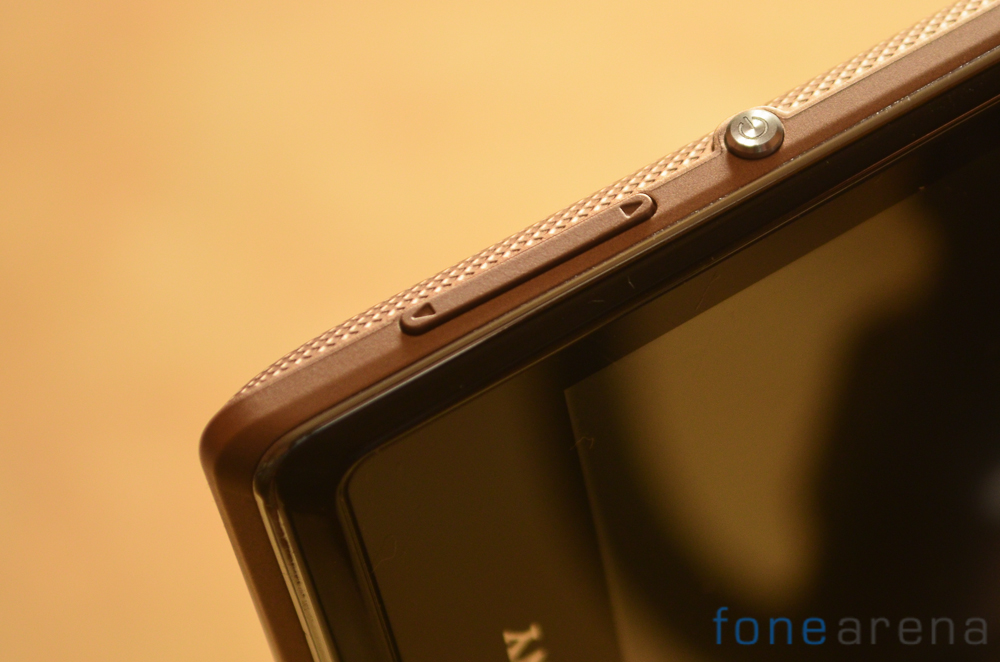
Towards the right side of the phone you can find the volume rocker, power key and camera key. The keys provide good enough feedback and are very easy to access.
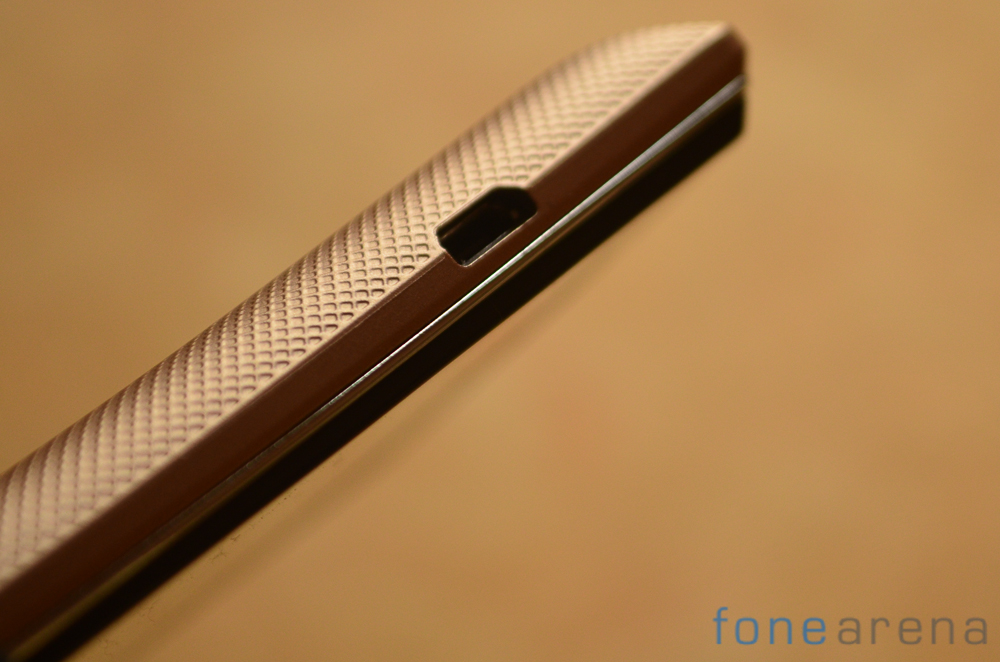
The left side lacks any buttons except for a lone micro USB port meant for charging and syncing data with your computer. Towards the top is the 3.5mm jack to use with headphones.

Sony has used an interesting texture on the back of the phone. The weave like pattern and the grippy material used results in a device that won’t easily slip from your hand. The plastic back easily opens up to give you access to the SIM card, micro SD slots and the removable battery.

A very cool addition that sets the Xperia E apart from the competition is the led embedded in the lower half of the phone. The display & light take up the hue that is set in the phone theme. It is possible to further control this RGB led via third party apps available in the Play store which offers a whole lot of possibilities.
Software
The Xperia E has a UI that is reminiscent to every other Sony Xperia device that you might have used in the past few years. The skin is not too resource intensive and brings some cool additions to the OS. As the UI layer is very similar to what we’ve seen previously, we’ll just touch upon some of the more interesting aspects.
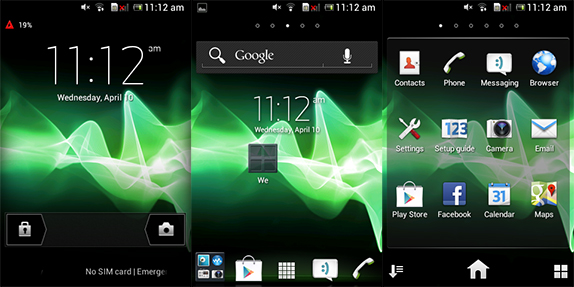
The lockscreen offers quick access to the camera and allows you to switch profiles with a simple swipe. Coming to the homescreen, if you’ve seen a Sony Xperia phone you’ll be right at home over here. A couple of widgets for weather information, music player and quick access toggles are included. The app launcher allows you to rearrange applications in alphabetical order or a custom sort.

Sony’s customizations extend to the pull down notification bar where you can find quick access toggle for vital functions. The Xperia E Dual also gets the same music player and photo gallery app that we love from the flagship models. The music player has a very Windows Phone like vibe and gets all the basics right. The photo gallery allows you to sort images by month and additionally, it can overlay them on a map which lets you see where exactly you took the photos provided you have geo tagging switched on. It is also possible to pull in your image feeds from a range of online services.
Performance
When we talk about budget devices like the Xperia E, benchmark scores aren’t the most important thing that we look as real life usability is what is more important. To its credit, the phone remains fast and fluid in all but the most demanding usage scenarios. The interface is well optimized and we couldn’t spot any perceptible amount of lag. Popular games like Temple Run work just fine. The phone is powered by a 1 GHz Qualcomm Snapdragon MSM7227A paired with the Adrena 200 GPU and 512MB of RAM. The limited amount of RAM may affect the multitasking potential of the phone depending on your usage pattern. We’ve included a few popular benchmark scores below if that interests you and you can check out our separate Sony Xperia E Dual benchmarks page for the complete range of scores.

Quadrant has become a de-facto benchmark for Android devices so we’ve included it above. The phone scores well above other devices from the same stable which are placed above the Xperia E in pricing. The Intel Atom powered Xolo X500 performs much better in the Quadrant benchmark.

The Xperia E is handily outpaced by the Xperia Go and the Xolo X500 due to the rather anemic Adreno 200 GPU in the phone. It is sufficient to play popular games like Temple Run but you might face issues with more graphically intensive apps and games.
Display
The screen on the Xperia E Dual has a resolution of 480 x 320. Stretched over 3.5 inches it offers 160ppi which is hardly something worth writing home about. The display is fairly bright but visibility under sunlight suffers.
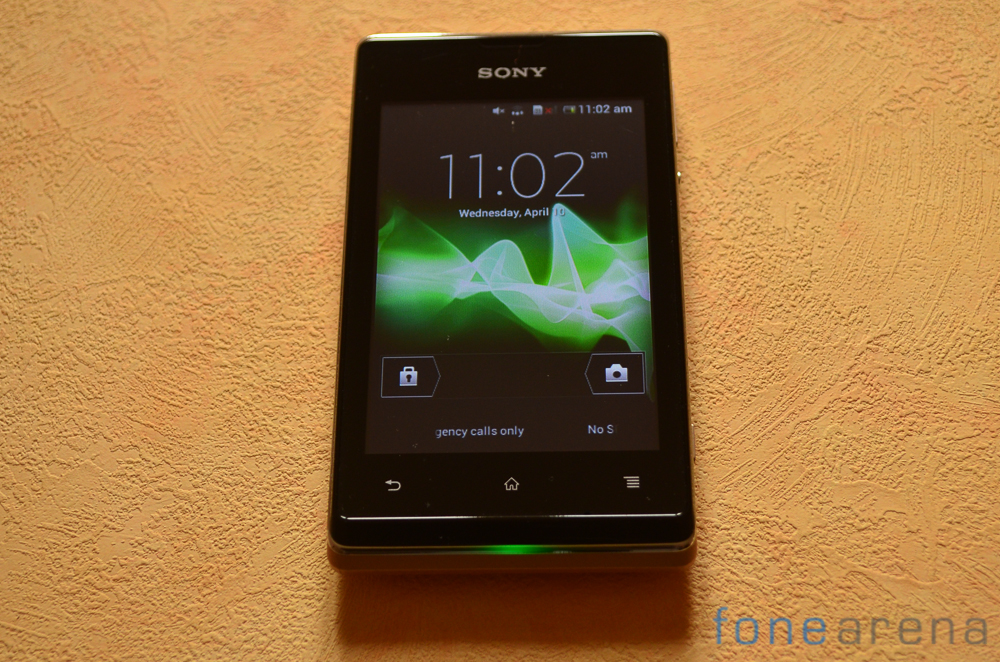
The screen is vibrant enough to make watching video clips possible if not enjoyable. The screen itself is adequately responsive.
Camera
Over at the back of the phone you can spot the camera module of the phone. The phone lacks an LED flash which is a curious omission. A front facing camera is also missing.
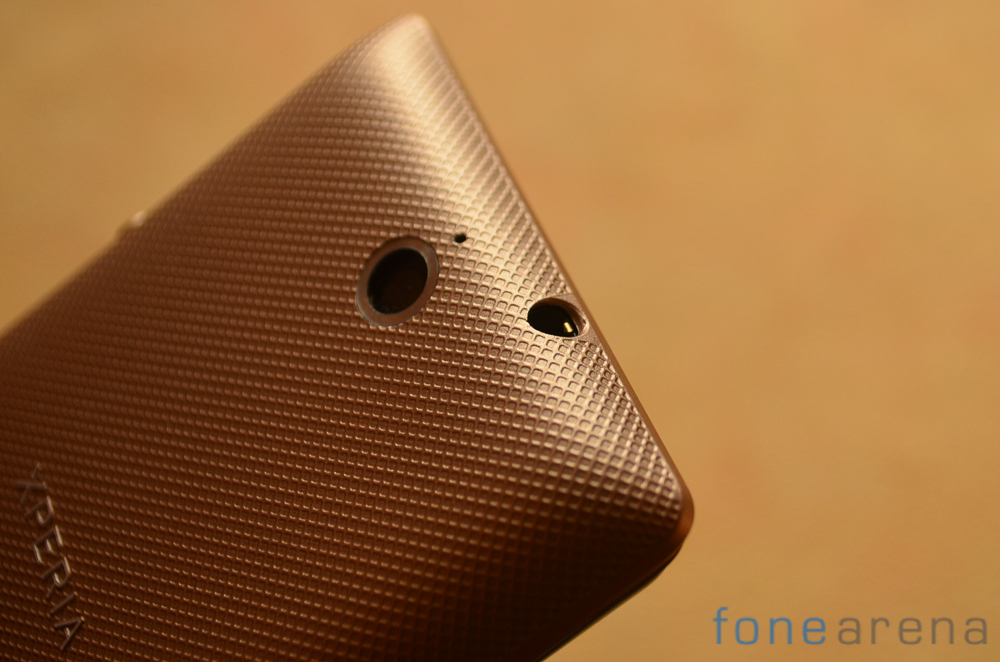
The camera with a resolution of 3.1MP is clearly one area where Sony has really scaled back. Maximum resolution for video recording is VGA which again is quite disappointing. The camera performance here is possibly one of the worst we have seen in a long time.

The camera struggles to get a focus lock on close up objects. As displayed in both the shots, white balance is totally off as well.

Photos shot even in bright light are incredibly low on details. Noise levels too tend to be on the higher side. We really cannot recommend that you use this camera to record anything of importance. It might suffice for the occasional snapshot but that’s about it. Low light performance images are unusable for the most part.
Battery Life & Connectivity
The Xperia E Dual as the name suggests is a dual SIM phone and accepts two mini SIM cards. The slots are located under the battery and can be accessed by removing the rear cover. A Dual SIM section is provided under settings to allow you to configure it to your liking.
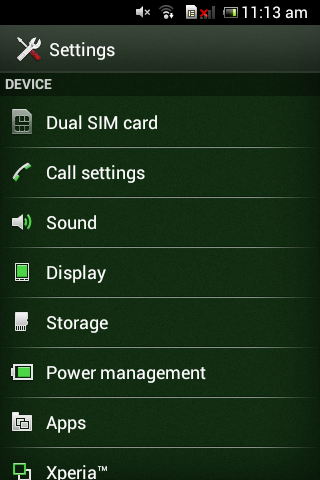
The battery is a 1530 mAh unit. We were positively surprised by the battery life we could squeeze out of the handset. With moderate usage, it is possible to get a day of usage.
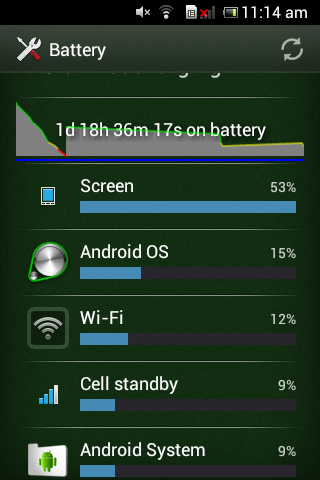
With the phone connected to a WiFI network and a fair amount of usage. We managed to get almost 2 days of standby before the phone gave us the first low battery warning. It is possible to further extend battery life via the Power Management settings pre configured by Sony.
Conclusion
The Xperia E Dual is not the best handset that you can get in the budget segment but it is a solid offering nonetheless. Good build quality, long battery life and a reliable software build means that if the essentials are what you care for then this could be the handset of choice for you. Those who desire a higher level of performance or a great camera may want to look elsewhere. The Xperia E Dual is available for Rs. 10,990.
Pros
- Good build quality
- Decent battery life
- Innovative notification LED
Cons
- Poor camera
- Middling performance
- No front facing camera
Sony Xperia Z officially launched in India
Sony Xperia Z officially launched in India, priced Rs. 38,990

Firstly, the Sony Xperia Z sports a new design language from Sony. It looks quite impressive and it feels really sleek when you hold it in your hands. Apart from the new design Sony has also loaded this device with some great hardware.
The Xperia Z sports a 5-inch display with a 1920×1080 pixels resolution which is powered by Sony’s BRAVIA engine. The smartphone is powered by a quad-core Qualcomm Snapdragon S4 Pro processor which is clocked at 1.5GHz. In addition to this the device includes 2GB of RAM, 16GB of built0in storage and it has a 2,330 mAh battery. It sports a 13 megapixel rear camera which Sony’s latest Exmor-RS sensor enabling the device shoot HDR videos and stills, it also includes a 1.9 megapixel front facing camera. Regardless of its sleek new design, the Xperia Z features a waterproof and dustproof exoskeleton.
It is equipped with all the key connectivity option including Wi-Fi, 3G, NFC, etc. and it has an microSD card slot for expandable memory. This Sony smartphone runs Android 4.1 Jelly Bean right out of the box.
Firstly, the Sony Xperia Z sports a new design language from Sony. It looks quite impressive and it feels really sleek when you hold it in your hands. Apart from the new design Sony has also loaded this device with some great hardware.
The Xperia Z sports a 5-inch display with a 1920×1080 pixels resolution which is powered by Sony’s BRAVIA engine. The smartphone is powered by a quad-core Qualcomm Snapdragon S4 Pro processor which is clocked at 1.5GHz. In addition to this the device includes 2GB of RAM, 16GB of built0in storage and it has a 2,330 mAh battery. It sports a 13 megapixel rear camera which Sony’s latest Exmor-RS sensor enabling the device shoot HDR videos and stills, it also includes a 1.9 megapixel front facing camera. Regardless of its sleek new design, the Xperia Z features a waterproof and dustproof exoskeleton.
It is equipped with all the key connectivity option including Wi-Fi, 3G, NFC, etc. and it has an microSD card slot for expandable memory. This Sony smartphone runs Android 4.1 Jelly Bean right out of the box.
Xolo A1000 review

Indian smartphone maker Xolo has launched a slew of devices in the past few months. The recent one to join the league is the Xolo A1000. Just like the previously launched Xolo A700 and Xolo A800, the smartphone packs in a 1GHz dual-core Mediatek MT6577 processor along with 1GB RAM. Carrying the price tag of Rs. 13,990, this smartphone is directly competing with the likes of Micromax Canvas A116 HD, Spice Stellar Pinnacle Mi-530 and Karbonn S1 Titanium. So is this smartphone a good challenger in this smartphone category? We find through this review.
Build/ Design
In the recent past, there have been plenty of large screen smartphones introduced by Indian manufacturers and Xolo A1000 is also one amongst them.
 However, most Indian brands have not been paying a lot of attention when it comes to the design aspect of their product. This is an area where Xolo A1000 scores, as it comes with decent looks and a good build quality. In fact, in terms of pure looks and build quality, the Xolo A1000 scores well above the Micromax A116 Canvas HD and Spice Mi-530.
We got a white unit, which comes with colour co-ordinated earplugs and a charger. The smartphone features slightly curved corners with a thin chrome lining gracing the sides.
The volume rocker and camera shortcut button are present on the left panel of the smartphone and a power button on the right. The placement of the camera shortcut button is a bit odd. In most smartphones, it is on the right panel so that after composing the shot, you use your right hand to reach for the top of the smartphone.
However, in case of the Xolo A1000, you will have to reach the bottom of the smartphone with your left hand to click an image. This camera shortcut button also doubles up as a button to capture screenshots. In most other Android smartphones, you will have to use a combination of buttons to capture screenshots but not in this one.
The 5-inch screen takes most of the front and there are three embossed buttons - Back, Home, and Menu. The front camera is placed on the top, the usual sensors and the earpiece. The top panel houses the 3.5mm jack and USB/ charging port.
The rear panel has an 8-megapixel camera, the speaker and the Xolo branding. Just like the Micromax A116 Canvas HD, the camera lens of this smartphone too is protruding outwards, which is a bit of a turn off. Also the back panel feels slightly plain. A textured pattern at the back would have added to the design value.
The thin back panel can be easily removed to access the battery, the dual-SIM slots and microSD card slot.
The Xolo A1000 is just 8.8 mm thick and fits nicely in the hand. Xolo has used One Glass Solution (OGS) technology to keep the smartphone slim and it claims that unlike all other 5-inch smartphones, the Xolo A1000 should not be referred to as a 'phablet' since you can easily use it with one hand. In our testing, we found that most of the commonly used functions like swiping through menu, making calls, accessing music, et al can be indeed be done by using just one hand.
Overall, we think that this is one of the better-designed smartphones by an Indian brand that we have come across.
 Display
Both Xolo A1000 and Micromax Canvas HD sport a 5-inch HD touchscreen display with 1280x720 resolution. The only difference is that Micromax A116 Canvas has a 294ppi pixel density as opposed to Xolo A1000 that offers 295ppi.
Text, icons, images and videos look sharp on the Xolo A1000 and the viewing angles are quite wide. As a matter of fact, we found that the display quality to be slightly better than the Micromax A116 Canvas HD, while the viewing angles are pretty good as well.
Under sun visibility on the Xolo A1000 is very good. The screen used in this smartphone is reflective. The touch response of the screen is also good.
Camera
The smartphone comes with an 8-megapixel autofocus rear snapper with LED flash and a 1.2-megapixel one on the front. There is no lag in clicking images. The images taken through the rear camera are decent under daylight. Pictures clicked indoors are respectable as well.
There are quite a few handy camera settings available to aid your photography needs such as white balance, auto focus, flash and select timer. You can also tweak the colour effects to mono, sepia, negative, aqua, blackboard and whiteboard.
There is also an HDR (High Dynamic Range) mode in the camera, which balances the light range of the image and comes in as a handy feature to help click high contrast images.
 The camera takes good quality videos but these video clips are saved as .3GP files, which is an older file format.
The images captured with the front camera are pretty much a standard affair.
Software/ Interface
The Xolo A1000 runs on Android 4.1.1 (Jelly Bean). It is pretty much the stock version of this operating system. There are five customisable home screens that can be filled with app shortcuts and widgets.
There company has not pre-loaded many apps on this smartphone. However, just like the other smartphones in the Xolo series, this device also comes pre-loaded with the Xolo Care app. The Xolo Care application helps customers to contact the customer care service via SMS, email or phone call. Apart from that, the smartphone also comes with a custom ToDo app. Like the name suggests, this app helps you in planning your work and achieving your tasks in a stipulated period of time.
 The other apps can be downloaded through the Google Play Store.
Performance/ Battery
This smartphone is powered by Mediatek's dual-core MT6577 chipset, which clocks in at a speed of 1GHz. This is coupled with 1GB RAM. The Xolo A1000 is quite responsive and we did not encounter any lags or crashes while multi-tasking.
The gaming experience on the smartphone is good too. We tried playing popular games such as Temple Run, Angry Birds and Subway Surfer on this smartphone and did not experience any hiccups.
Xolo A1000 comes with a built-in storage of 4GB and can be further expanded by up to 32GB via a microSD card.
The smartphone comes with an audio player that can play MP3, WAV and MIDI formats. While the video player can play MP4 and 3GP formats but not AVI files. This, of course, can be fixed by download third-party apps.
The audio quality is good both on the headphones and the loudspeaker. The video quality on the device is good as well.
 The Xolo A1000 comes with a 2,100mAh battery that lasts a day with moderate to heavy usage.
The Xolo A1000 comes with a stock Android browser and webpages render well on this smartphone. It is a dual-SIM smartphone, supporting dual standby.
Verdict
If you are looking for a large screen Android smartphone with a budget in mind, then Xolo A1000 is worth considering. It is a good-looking smartphone with sturdy build quality. To top it all, the smartphone also packs in an impressive display.
Though the device does not give any lags in multi-tasking or playing games, but if you still prefer a quad-core processor, then you might like to consider Micromax A116 Canvas HD. Another quad-core smartphone that one can look at is Karbonn S1 Titanium. This smartphone comes with a smaller screen and an inferior display. Moreover, the battery too is relatively smaller and at Rs. 10,900 so is the price.
Spice Stellar Pinnacle Mi-530 is another dual-core offering from Spice which comes with a larger 5.3-inch screen size, but an inferior display as compared to Xolo A1000 and costs exactly the same.
It's noteworthy, that we have not done full-blown reviews of Karbonn S1 Titanium and Spice Stellar Pinnacle Mi-530 smartphones up till now and should be able to give better comparison after that.
Consumers who do not mind shelling an extra Rs. 7,000 may even want to check out the Samsung Galaxy Grand Duos. It also has an inferior screen and battery life when pitted against the Xolo A1000, but has a better overall performance and brand acceptance.
Build/ Design
In the recent past, there have been plenty of large screen smartphones introduced by Indian manufacturers and Xolo A1000 is also one amongst them.
However, most Indian brands have not been paying a lot of attention when it comes to the design aspect of their product. This is an area where Xolo A1000 scores, as it comes with decent looks and a good build quality. In fact, in terms of pure looks and build quality, the Xolo A1000 scores well above the Micromax A116 Canvas HD and Spice Mi-530.We got a white unit, which comes with colour co-ordinated earplugs and a charger. The smartphone features slightly curved corners with a thin chrome lining gracing the sides.
The volume rocker and camera shortcut button are present on the left panel of the smartphone and a power button on the right. The placement of the camera shortcut button is a bit odd. In most smartphones, it is on the right panel so that after composing the shot, you use your right hand to reach for the top of the smartphone.
However, in case of the Xolo A1000, you will have to reach the bottom of the smartphone with your left hand to click an image. This camera shortcut button also doubles up as a button to capture screenshots. In most other Android smartphones, you will have to use a combination of buttons to capture screenshots but not in this one.
The 5-inch screen takes most of the front and there are three embossed buttons - Back, Home, and Menu. The front camera is placed on the top, the usual sensors and the earpiece. The top panel houses the 3.5mm jack and USB/ charging port.
The rear panel has an 8-megapixel camera, the speaker and the Xolo branding. Just like the Micromax A116 Canvas HD, the camera lens of this smartphone too is protruding outwards, which is a bit of a turn off. Also the back panel feels slightly plain. A textured pattern at the back would have added to the design value.
The thin back panel can be easily removed to access the battery, the dual-SIM slots and microSD card slot.
The Xolo A1000 is just 8.8 mm thick and fits nicely in the hand. Xolo has used One Glass Solution (OGS) technology to keep the smartphone slim and it claims that unlike all other 5-inch smartphones, the Xolo A1000 should not be referred to as a 'phablet' since you can easily use it with one hand. In our testing, we found that most of the commonly used functions like swiping through menu, making calls, accessing music, et al can be indeed be done by using just one hand.
Overall, we think that this is one of the better-designed smartphones by an Indian brand that we have come across.
DisplayBoth Xolo A1000 and Micromax Canvas HD sport a 5-inch HD touchscreen display with 1280x720 resolution. The only difference is that Micromax A116 Canvas has a 294ppi pixel density as opposed to Xolo A1000 that offers 295ppi.
Text, icons, images and videos look sharp on the Xolo A1000 and the viewing angles are quite wide. As a matter of fact, we found that the display quality to be slightly better than the Micromax A116 Canvas HD, while the viewing angles are pretty good as well.
Under sun visibility on the Xolo A1000 is very good. The screen used in this smartphone is reflective. The touch response of the screen is also good.
Camera
The smartphone comes with an 8-megapixel autofocus rear snapper with LED flash and a 1.2-megapixel one on the front. There is no lag in clicking images. The images taken through the rear camera are decent under daylight. Pictures clicked indoors are respectable as well.
There are quite a few handy camera settings available to aid your photography needs such as white balance, auto focus, flash and select timer. You can also tweak the colour effects to mono, sepia, negative, aqua, blackboard and whiteboard.
There is also an HDR (High Dynamic Range) mode in the camera, which balances the light range of the image and comes in as a handy feature to help click high contrast images.
The camera takes good quality videos but these video clips are saved as .3GP files, which is an older file format.The images captured with the front camera are pretty much a standard affair.
Software/ Interface
The Xolo A1000 runs on Android 4.1.1 (Jelly Bean). It is pretty much the stock version of this operating system. There are five customisable home screens that can be filled with app shortcuts and widgets.
There company has not pre-loaded many apps on this smartphone. However, just like the other smartphones in the Xolo series, this device also comes pre-loaded with the Xolo Care app. The Xolo Care application helps customers to contact the customer care service via SMS, email or phone call. Apart from that, the smartphone also comes with a custom ToDo app. Like the name suggests, this app helps you in planning your work and achieving your tasks in a stipulated period of time.
The other apps can be downloaded through the Google Play Store.Performance/ Battery
This smartphone is powered by Mediatek's dual-core MT6577 chipset, which clocks in at a speed of 1GHz. This is coupled with 1GB RAM. The Xolo A1000 is quite responsive and we did not encounter any lags or crashes while multi-tasking.
The gaming experience on the smartphone is good too. We tried playing popular games such as Temple Run, Angry Birds and Subway Surfer on this smartphone and did not experience any hiccups.
Xolo A1000 comes with a built-in storage of 4GB and can be further expanded by up to 32GB via a microSD card.
The smartphone comes with an audio player that can play MP3, WAV and MIDI formats. While the video player can play MP4 and 3GP formats but not AVI files. This, of course, can be fixed by download third-party apps.
The audio quality is good both on the headphones and the loudspeaker. The video quality on the device is good as well.
The Xolo A1000 comes with a 2,100mAh battery that lasts a day with moderate to heavy usage.The Xolo A1000 comes with a stock Android browser and webpages render well on this smartphone. It is a dual-SIM smartphone, supporting dual standby.
Verdict
If you are looking for a large screen Android smartphone with a budget in mind, then Xolo A1000 is worth considering. It is a good-looking smartphone with sturdy build quality. To top it all, the smartphone also packs in an impressive display.
Though the device does not give any lags in multi-tasking or playing games, but if you still prefer a quad-core processor, then you might like to consider Micromax A116 Canvas HD. Another quad-core smartphone that one can look at is Karbonn S1 Titanium. This smartphone comes with a smaller screen and an inferior display. Moreover, the battery too is relatively smaller and at Rs. 10,900 so is the price.
Spice Stellar Pinnacle Mi-530 is another dual-core offering from Spice which comes with a larger 5.3-inch screen size, but an inferior display as compared to Xolo A1000 and costs exactly the same.
It's noteworthy, that we have not done full-blown reviews of Karbonn S1 Titanium and Spice Stellar Pinnacle Mi-530 smartphones up till now and should be able to give better comparison after that.
Consumers who do not mind shelling an extra Rs. 7,000 may even want to check out the Samsung Galaxy Grand Duos. It also has an inferior screen and battery life when pitted against the Xolo A1000, but has a better overall performance and brand acceptance.


